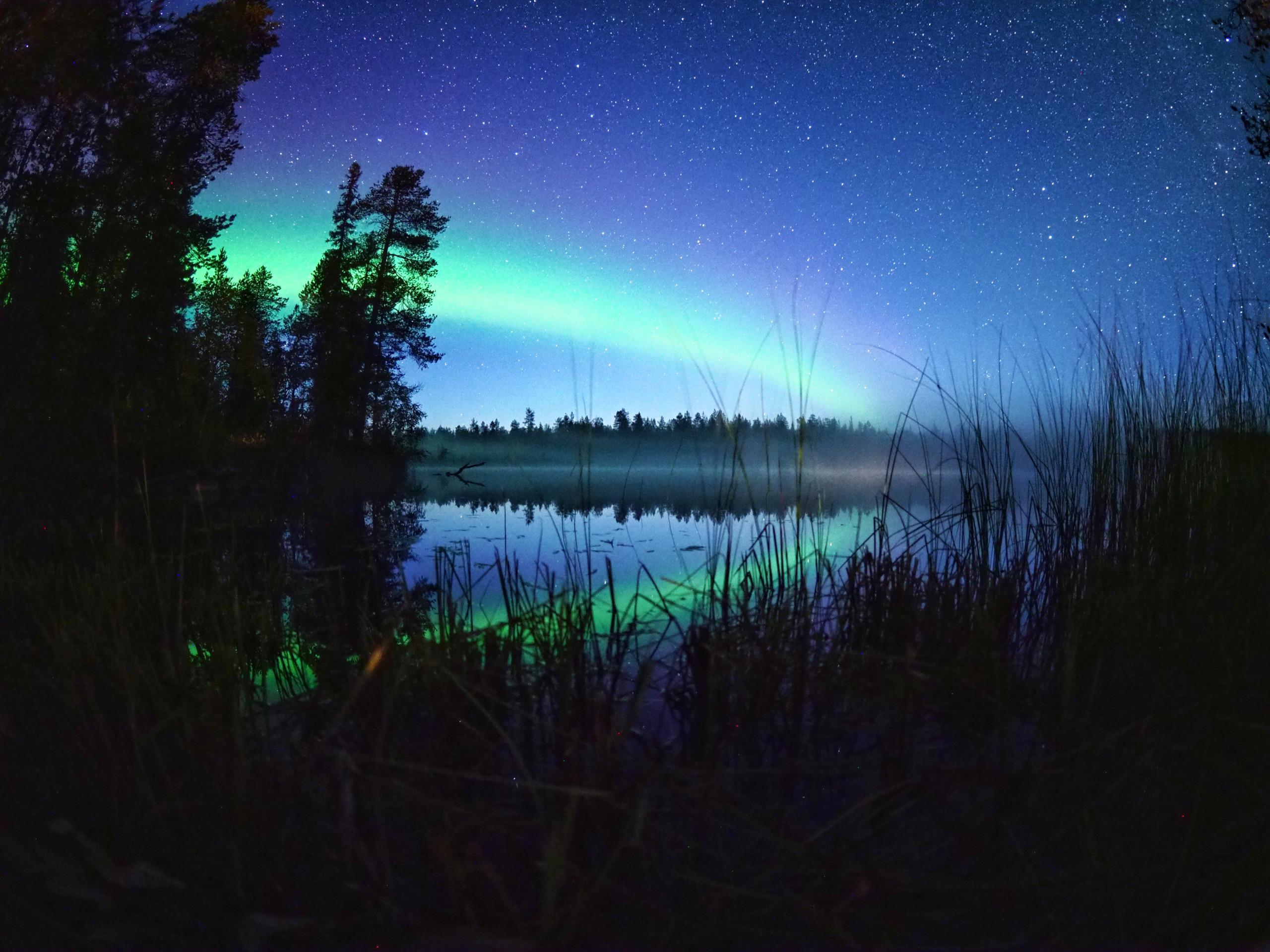





As the autumn evenings grow darker, the northern sky begins to tell its ancient stories once again. In one of them, the forest’s most mysterious creature sweeps its tail across the landscape, sending sparks all the way to the stars.
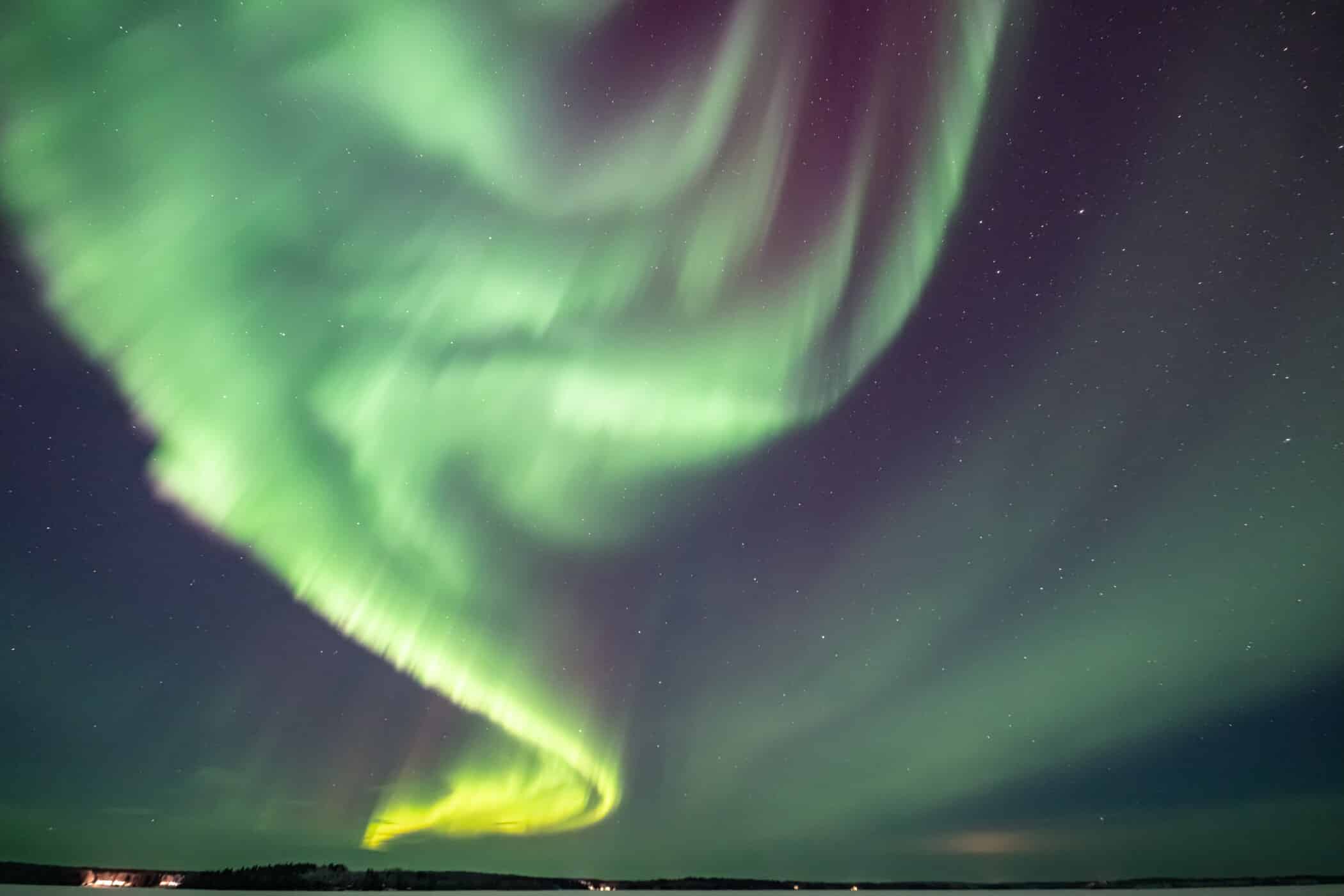
First, a pale arc appears in the sky. It rests above the fells for a moment, as though wondering whether it dares to come closer. Then the light begins to move, unfurling into a curtain and dancing across the darkness.
Today, we know that the northern lights are created when charged particles from the Sun interact with the Earth’s atmosphere. To people in centuries past, however, the sky was not a world of particles and magnetic fields. It was a mystery in which natural phenomena had a will and meaning of their own—and sometimes even a tail.
The Finnish word for the northern lights, revontulet, literally means “fox fires”. It comes from an old tale about a mythical fire fox racing across the fells so quickly that its tail struck the trees, rocks or snowdrifts. The sparks sent flying by each sweep of its tail rose into the sky and set the northern lights ablaze.
This was no ordinary forest animal, but a rare and almost impossible-to-catch creature of legend. Anyone who managed to capture it was believed to become rich and famous.
The northern lights have also been known in Finnish as the Fires of the Sky, the Fires of Ruija—an old Finnish name for the far north of Norway—and the Gates of the North. The last of these names beautifully describes the arch of light stretching across the northern sky: it can look as though an invisible gateway has opened briefly into another world.
The Northern Sámi word guovssahasat is also associated with the Siberian jay, a colourful bird found in northern forests. The connection feels fitting: both the bird and the northern lights are full of colour, sudden changes of direction and the unpredictable curiosity of the wilderness.
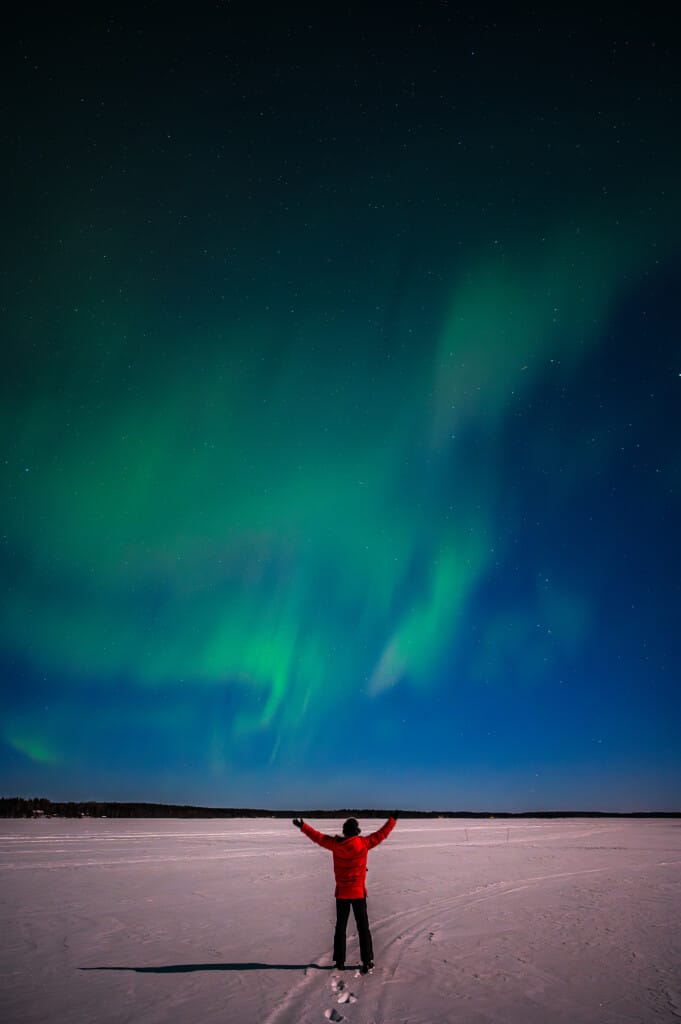
Across the North, the lights have been interpreted as everything from the souls of the departed to dancers in the sky. In Scotland, they were known as the Merry Dancers, while red auroras were sometimes feared as omens of war and great upheaval.
The northern lights season begins as the nights grow darker in autumn and continues until spring—as long as the sky remains dark enough for the lights to be seen. Autumn is an especially promising time for aurora watching. Around the autumn equinox, energy from the solar wind is transferred more efficiently into the Earth’s magnetic field, increasing geomagnetic activity.
You can follow the latest aurora forecasts on the Finnish Meteorological Institute’s website or through one of the many northern lights apps available.
Follow the Fire Fox’s Trail
Would you love to see the northern lights but are unsure when or where to look? On our guided northern lights tour, we leave the lights of the village behind and head out beneath the northern sky.
We take care of transport, snacks and a plan suited to the evening’s conditions—leaving you free to watch the sky for signs of the legendary fire fox.
Ask for more information and book your place:
Safari House reception
+358 8 860 8600
safarihouse@rukapalvelu.fi