


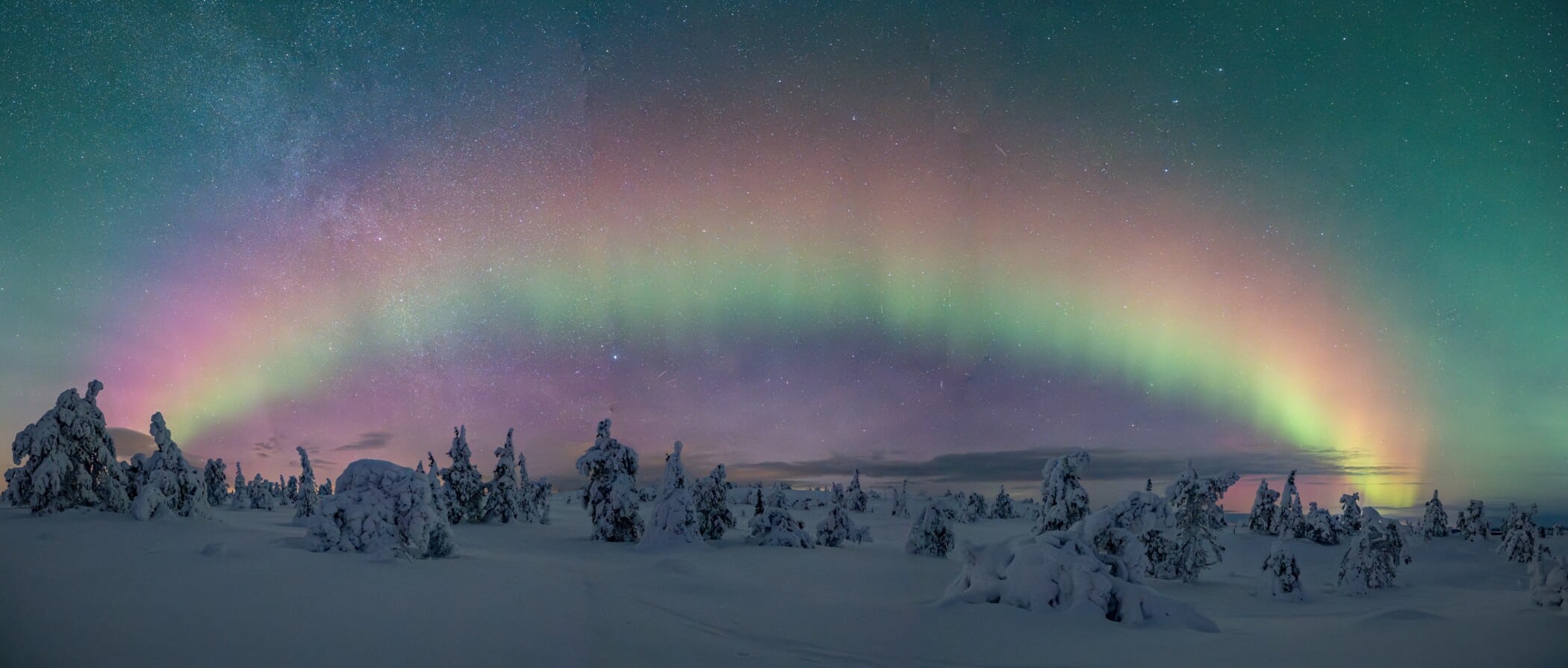



Ancient Finns believed the northern lights were a natural phenomenon woven into their mythological world, explained through vivid folklore rather than science. The most enduring belief was that the aurora was created by a cosmic fox running across the sky, its tail brushing sparks from the snow-capped fells. Finnish myths about the northern lights are among the most imaginative in the Arctic world, and they still shape how people experience the phenomenon today.
What did ancient Finns believe the northern lights were made of?
Ancient Finns believed the northern lights were sparks and light scattered across the sky by a magical fox sprinting across the fells. As the fox ran, its bushy tail swept across snowdrifts and sent glittering particles flying upward into the night sky, creating the shimmering curtains of light that people watched in awe from below.
This belief was deeply embedded in Finnish folk culture long before scientific explanations existed. The fox was not seen as an ordinary animal but as a supernatural creature with the power to paint the heavens. The image made intuitive sense to people living close to nature: the flickering, fast-moving quality of the aurora really does resemble something brushed or swept rather than fixed in place.
Other older Finnish beliefs connected the lights to fires burning on distant shores or flames carried by spirits moving through the sky. Some communities interpreted the aurora borealis northern lights display as reflections from vast schools of fish in the sea, or as light bouncing off the scales and fins of enormous creatures beneath the water. These explanations varied by region, but the fox story became the most widespread and lasting.
What does the word ‘revontulet’ actually mean in Finnish?
The Finnish word for northern lights, revontulet, translates directly as “fox fires” in English. The word breaks down into repo (an old Finnish word for fox) and tulet (fires or lights). So every time a Finnish speaker says the word for aurora borealis, they are literally saying “the fires of the fox.”
This linguistic connection shows just how deeply the fox mythology was embedded in Finnish culture. The word was not a poetic addition or a later invention. It was the practical, everyday term used by ordinary people, which tells us that the fox explanation was the dominant and most widely accepted one across Finnish-speaking communities.
The word revontulet is still used in modern Finnish today, making it one of the rare cases where ancient mythology survives intact inside everyday language. When you look up at the aurora in Northern Finland, you are watching what generations before you called the fox fires, and the name has not changed in centuries.
Were the northern lights seen as a good or bad omen in Finnish folklore?
In Finnish folklore, the northern lights carried both positive wonder and a sense of caution depending on the context and the community. They were rarely seen as purely threatening, but they were taken seriously as signs from the natural and spiritual world rather than dismissed as simple spectacle.
When the aurora was seen as a warning
In some Finnish traditions, a particularly intense or red-tinted aurora was read as a warning of coming conflict, hardship, or harsh weather. Bright red or blood-coloured displays were sometimes interpreted as omens of war or difficult times ahead. This was not unique to Finland but reflected a broader Northern European tendency to read dramatic sky events as messages from forces beyond human control.
When the aurora carried a more neutral or positive meaning
In many communities, the aurora was simply part of the rhythm of winter life, awe-inspiring but not necessarily frightening. The fox mythology gave it a playful, almost mischievous character rather than a menacing one. The lights were something to observe, respect, and tell stories about. In some beliefs, they were connected to the souls of the departed, drifting peacefully through the sky, which gave them a quietly comforting quality.
The overall tone of Finnish aurora folklore leans toward wonder and respect rather than fear, which fits the broader Finnish relationship with nature as something powerful but not hostile.
How do Finnish aurora myths compare to Sámi and Norse beliefs?
Finnish, Sámi, and Norse aurora myths all reflect Arctic cultures trying to make sense of the same dramatic sky phenomenon, but each tradition interpreted it through its own spiritual and cultural lens. The Finnish fox story is playful and nature-focused, while Sámi and Norse traditions often connected the lights more directly to the spirit world and the dead.
Sámi beliefs about the aurora
The Sámi people, the indigenous inhabitants of the far north, including parts of what is now Northern Finland, held deep respect for the northern lights and in many traditions treated them with caution. Some Sámi communities believed the aurora represented the souls of the deceased, and it was considered unwise to wave at or mock the lights. In certain traditions, the aurora could reach down and harm those who disrespected it. This gave the Sámi relationship with the aurora a more spiritually charged and cautious quality compared to the Finnish fox story.
Norse beliefs about the aurora
In Norse mythology, the northern lights were sometimes interpreted as the reflections of the shields of the Valkyries as they rode across the sky, escorting fallen warriors to Valhalla. This connected the aurora directly to battle, death, and the afterlife in a way that gave it a dramatic, warrior-culture framing. Some Norse communities also linked the lights to the Bifrost, the rainbow bridge connecting the human world to the realm of the gods.
What all three traditions share is a refusal to see the aurora as random or meaningless. Whether it was a fox, the souls of ancestors, or divine warriors, every culture that lived beneath the Arctic sky found a story that made the lights part of their world. That instinct to find meaning in the aurora is something that still draws people north today.
See the northern lights with Rukapalvelu
Ruka–Kuusamo in Northern Finland is one of the best places in the world to witness the aurora borealis with your own eyes. The region sits in the auroral zone, meaning the sky lights up regularly throughout the autumn and winter months, often with remarkable intensity.
We at Tailored Adventures Rukapalvelu organise guided aurora-hunting experiences that take you away from artificial light and into the dark wilderness where the sky can truly perform. Here is what we can arrange for your northern lights trip:
- Guided aurora-hunting excursions by snowmobile or on foot
- Comfortable accommodation in Hotel Arctic Zone or wilderness lodges
- Snowmobile safaris, husky safaris, and reindeer experiences to fill your days
- Customised packages for individuals, groups, and corporate incentive trips
This is the Farnorth experience: closer than you think, wilder than you imagined. The same sky that inspired centuries of Finnish fox-fire mythology is waiting for you above the forests and frozen lakes of Ruka–Kuusamo.
Explore our winter activities in Ruka–Kuusamo and start planning your aurora adventure with us.