


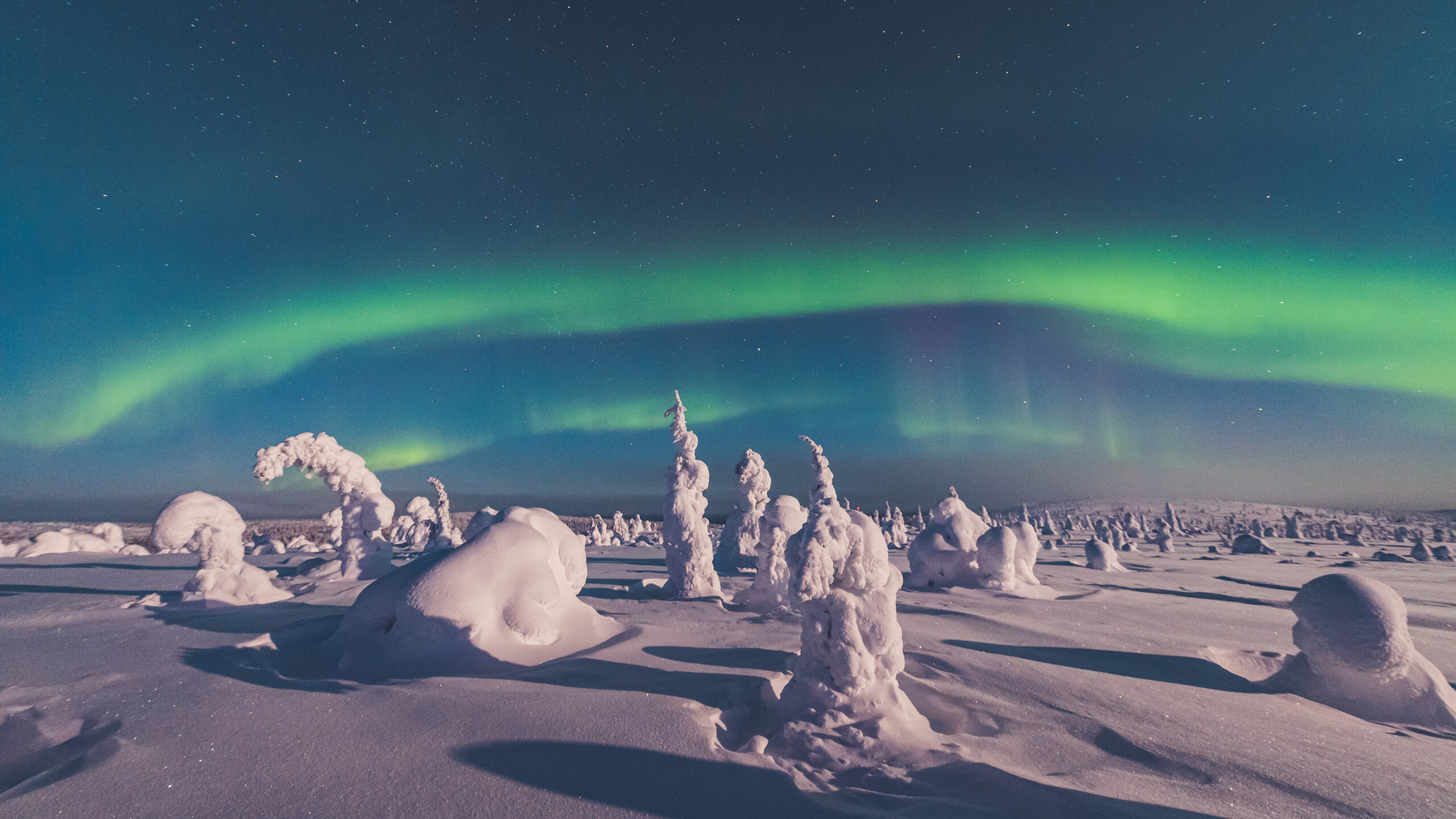



For a northern lights tour in Ruka–Kuusamo, you need warm, windproof, and moisture-resistant clothing that keeps you comfortable during long periods of standing still in sub-zero temperatures. The short answer: dress in three layers, cover every exposed patch of skin, and prioritize warmth over style. Below, you’ll find answers to the most common clothing questions before an aurora hunt.
How cold does it get on a northern lights tour in Ruka–Kuusamo?
Temperatures on a northern lights tour in Ruka–Kuusamo typically range from around -5°C to -25°C (23°F to -13°F), depending on the month. January and February are the coldest, while November and March tend to be milder. Wind chill can make it feel significantly colder, especially when you are standing still outdoors for 30 minutes or more, waiting for the aurora to appear.
What makes aurora hunting particularly demanding from a clothing perspective is exactly that: you are not moving. On a snowmobile safari or a hike, your body generates heat. On an aurora tour in Ruka–Kuusamo, you stop, look up, and wait. That stillness means your body cools down faster than you might expect, even at temperatures that feel manageable at first.
A good rule of thumb is to dress as if the temperature is 10 degrees colder than the forecast. If the thermometer reads -10°C, dress for -20°C. You can always open a zipper to cool down, but you cannot add warmth you did not bring with you.
What is the best layering system for an aurora hunt?
The best layering system for an aurora hunt consists of three distinct layers: a moisture-wicking base layer, an insulating mid layer, and a windproof and waterproof outer shell. Each layer has a specific job, and together they regulate your body temperature and protect you from the cold and wind.
Base layer: keep moisture away from your skin
Your base layer sits directly against your skin and its job is to move sweat away from your body. Choose merino wool or synthetic thermal underwear. Avoid cotton entirely. Cotton absorbs moisture and holds it against your skin, which causes rapid heat loss. A good merino base layer keeps you warm even when damp and does not develop odour quickly.
Mid layer: trap warmth close to your body
The mid layer is your main source of insulation. A fleece jacket or a down-filled vest works well here. For very cold conditions (below -15°C), consider a thick down jacket as your mid layer rather than a lightweight fleece. The goal is to trap warm air close to your body without adding so much bulk that you cannot move your arms comfortably.
Outer shell: block wind and moisture
Your outer layer needs to block wind and repel moisture, whether that is snow, sleet, or freezing drizzle. A waterproof and windproof jacket and trousers are the standard choice. Many tour operators in Ruka–Kuusamo provide thermal overalls or snowsuits for guests, which combine insulation and weather protection in one garment. If you are joining a guided northern lights tour, check in advance whether outerwear is included.
What accessories should you bring on a northern lights tour?
On a northern lights tour, the accessories that matter most are a warm hat, a balaclava or neck gaiter, insulated waterproof gloves or mittens, and thick wool socks inside insulated winter boots. These items protect the parts of your body most vulnerable to frostbite: your head, face, hands, and feet.
- Hat: A thick wool or fleece-lined hat that covers your ears. A significant amount of body heat escapes through your head, so this is non-negotiable.
- Balaclava or neck gaiter: Covers your face and neck. At -20°C, exposed skin can develop frostbite within minutes. A balaclava that you can pull up over your nose and mouth is ideal.
- Mittens over gloves: Mittens keep your fingers together and retain heat far better than individual gloves. Consider a liner glove underneath so you can briefly remove the mitten to use your phone without exposing bare skin to the cold.
- Winter boots: Insulated to at least a -30°C or -40°C rating, with a waterproof outer. Your feet are in contact with snow and frozen ground, so boot quality matters enormously.
- Wool socks: One thick pair of wool socks is better than two thin cotton pairs. Wool insulates even when wet and does not compress as much inside the boot.
- Hand warmers: Small chemical heat packs are a practical backup for your pockets and gloves on especially cold nights.
If you plan to photograph the aurora, bring a spare battery for your camera. Cold temperatures drain batteries quickly, and a battery that reads 40% in a warm room can drop to zero within minutes outdoors.
What should you avoid wearing on an aurora tour?
On a northern lights tour, avoid cotton clothing, denim jeans, fashion boots or trainers, and any single-layer outerwear that lacks proper insulation. These choices leave you cold, damp, and uncomfortable within the first 15 minutes outdoors, and they can turn an exciting experience into a miserable one.
Cotton is the most common mistake. It feels comfortable indoors but becomes a liability the moment you start perspiring, even lightly. Once damp, cotton provides almost no insulation and takes a long time to dry. The same applies to denim jeans, which are heavy, slow to dry, and offer no meaningful warmth in sub-zero conditions.
Fashion boots and regular trainers are another frequent problem. They may look fine, but most are not insulated or waterproof enough for standing in snow at -15°C for an extended period. Cold feet will end your evening far sooner than you planned.
Finally, avoid wearing too many thin layers instead of proper thermal ones. Five thin cotton T-shirts do not equal one good merino base layer. The quality and type of each layer matters more than the quantity.
Northern lights tours with Tailored Adventures Rukapalvelu
We are Tailored Adventures Rukapalvelu, a family-owned destination company with over 35 years of experience in the Ruka–Kuusamo region. We organise northern lights tours as guided forest excursions and snowmobile safaris under the open Arctic sky.
Our aurora hunts are designed for all experience levels and are led by local guides who know where and when the lights are most likely to appear. Here is what we typically include:
- Guided northern lights excursions on foot or by snowmobile
- Thermal overalls and winter gear for guests who need them
- Transfers from Ruka
- Warm drinks and snacks during the tour
- Combination options with other winter activities such as husky safaris or river floating
This is the spirit of Farnorth: closer than you think, wilder than you imagined. The Ruka–Kuusamo wilderness, with its frozen lakes, snow-laden forests, and dark winter skies, is one of the finest places in Northern Finland to witness the aurora borealis. We handle the logistics so you can simply look up.
Explore our full range of winter activities in Ruka–Kuusamo or get in touch with us to plan your northern lights experience. We are happy to put together a complete travel package that includes accommodation, activities, and everything in between.